

Program Accreditation
Oregon Institute of Technology is accredited by the Northwest Commission on Colleges and Universities, 8060 165th Ave. NE, Suite 100, Redmond, WA 98052-3981, an institutional accrediting body recognized by the Council for Higher Education Accreditation and/or the Secretary of the U.S. Department of Education.
Program Mission
The mission of the Master of Science in Engineering (MSE) program at Oregon Institute of Technology is to prepare engineering professionals with advanced knowledge and skills in high-demand multi-disciplinary engineering fields who are ready to assume a broad range of technical and leadership roles.
The MSE program supports the university mission of offering “innovative, professionally-focused undergraduate and graduate degree programs” and providing “a hands-on, project-based learning environment,” with an emphasis on “innovation, scholarship, and applied research.” It is an applied professional MS program in engineering, designed to allow maximum flexibility while maintaining academic rigor. The flexibility in the MSE degree ensures a relevant, up-to-date educational experience, and the ability to meet emergent industry needs in multidisciplinary technical fields. The program also aligns with the university core themes (applied degree programs, student and graduate success, statewide educational opportunities, and public service).
Program Educational Objectives
The following program educational objectives (PEO) reflect what graduates from the MSE program should be able to accomplish within a few years of graduation, and stem directly from the program mission.
- Graduates of the program will excel as professionals in a broad range of technical and leadership roles within the various fields of engineering.
- Graduates of the program will demonstrate an ability to apply advanced engineering methods to the solution of complex problems involving one or more engineering disciplines.
- Graduates of the program will demonstrate an ability to acquire emerging knowledge and remain current within their field.
Program Student Learning Outcomes
Consistent with the program mission and objectives, the MSE program possesses specific measurable outcomes. The outcomes state specific knowledge, skills, and experiences that students should have attained by the time of graduation. Graduating students in the MSE program will demonstrate:
- An ability to conduct research and development involving one or more engineering disciplines.
- An ability to apply advanced engineering concepts, methods and principles to solve complex technical problems.
MSE students who are graduating from the accelerated BS+MSE degree program are expected to also meet the program-level outcomes associated with their undergraduate program, as well as the institutional-level student learning outcomes (ISLOs). Information about these outcomes can be found in the corresponding report for the undergraduate program, and the ISLO university reports.
Summary of Student Learning Outcomes
The Electrical Engineering and Renewable Energy faculty formally assess the student learning outcomes which is summarized in the annual program assessment report. Additional details can ge found in department assessment records.
Program Curriculum Map
The MSE curriculum map supports the development and attainments of the program outcomes. Table 3 provides a mapping of the courses in the MSE curriculum to each program outcome. The table identifies how each program outcome appears within the curriculum at the Foundation (Introduction), Practice (Reinforcement and Application) and Capstone (Synthesis) levels.
Table 3: MSE Curriculum to Outcome Mapping


Annual Program Assessment Reports
Contact
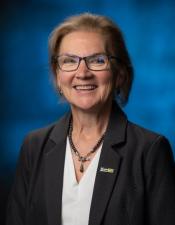
Dr. Neslihan Alp is Dean of the College of Engineering, Technology, and Management at Oregon Institute of Technology (Oregon Tech), a position she has held since January 2024. Previously, she served as Vice President for Academic Affairs and Provost at Pennsylvania College of Technology, Dean of the Bailey College of Engineering and Technology at Indiana State University, and Associate Dean and Professor at the University of Tennessee at Chattanooga.
Dr. Alp earned her B.S. in Engineering Management and M.S. in Industrial Engineering from Istanbul Technical University and her Ph.D. in Engineering Management from the University of Missouri-Rolla. She has authored more than 100 publications and has secured over $50 million in grants and philanthropic support throughout her career. Her academic leadership includes developing and expanding programs in emerging and high-demand fields, advancing online education, and strengthening industry and workforce partnerships.
A licensed Professional Engineer and Fellow of the American Society for Engineering Management, Dr. Alp has received numerous awards for teaching, research, service, leadership, and contributions to diversity in STEM. She serves as an ABET Commissioner and was elected to the Board of the National Institute for Engineering Ethics (NIEE) for a three-year term beginning July 1, 2026.