
Welcome to the AIRE Center
Center for Advancing Interdisciplinary Research on the Environment (AIRE)

News
As a research center at Oregon Tech, our mission is to investigate key aspects of the environment and their impact on our communities.
Our team of researchers and affiliated experts examine how issues of air and water quality, soil, and ecosystems interact with social and cultural systems in Southern Oregon and the Pacific Northwest. AIRE aims to prevent damage and deter threats to our environment, communities, and health, and to translate research results into practical strategies in collaboration with stakeholders and community partners.
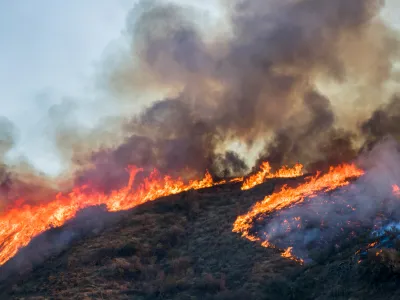
Southern Oregon and the Pacific Northwest are experiencing a growing number of environmental challenges ranging from wildfires, drought, and ecosystem changes, as well as social, cultural, and technological shifts.
Based on our distinct cultural and geographic location and driven by our University's mission and focus on applied research and education, Oregon Tech's AIRE Center is uniquely positioned to study these environmental threats, identify the key health risks, propose research-based solutions, craft public health interventions, and improve conditions in this region. We are particularly interested in addressing the air quality problems related to wildfires, pollution, and agricultural practices, along with increasing drought patterns and the effects on local communities and ecosystems.
The AIRE Center is the successful expansion of the interdisciplinary Hospital Burdens and Air Quality (HBAQ) Project, initiated in 2019 by faculty and students from across multiple academic programs at Oregon Tech.
Together with community partners, the HBAQ team examined air quality and assisted hospitals with the impacts of poor air quality due to wildfires. Based on the success of this pilot project, we were able to secure a $1 million federal HRSA (Health Resources and Services Administration) grant from The Labor, Health and Human Services and Education bill passed in early 2022. These funds now support research into the health problems related to wildfires, such as rising hospitalization rates, indoor and outdoor air quality composition assessments, prevalence and usage of wood burning stoves and other devices, and agricultural related air quality events, among others.
Today, the AIRE Center has expanded even further to also include contributions from disciplines such as environmental ethics, humanities, and social and behavioral sciences.
Contact Information
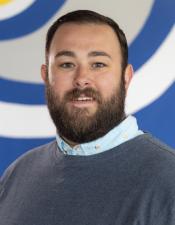
Dr. Chapman is Chair of the Humanities and Social Sciences Department and Director of the Center for Advancing Interdisciplinary Research on the Environment (AIRE). Since coming to Oregon Tech in 2016, Dr. Chapman has taught in the Medical Sociology minor and the B.S. Population Health Management program. The program provides students with a health-specific sociological education that is applicable to the fields of public health and health care. He teaches courses in medical sociology, research methods, and social inequality.
Dr. Chapman has conducted a range of research on the role of social factors in physical and mental health conditions at both community- and population-levels. His specific interests are in aging, chronic disease, environmental problems and health care, health care professionals, educational disparities, and health behaviors.
Recently, he has worked on projects studying a range of topics, including: impacts of wildfires on hospital systems, health effects of prescribed burns, patients who recurrently miss medical appointments, head and neck cancer screenings in dental clinics, suicide screenings in primary care, and mental health among first responders. His work is featured in many outlets, including Public Health and Practice, Journal of Primary Care and Community Health, Journal of Applied Social Science, AIR, Disaster Medicine and Public Health Preparedness, Rural Sociology, among others. When he is not teaching and conducting research, Kyle enjoys exploring the attractions of the Pacific Northwest with his family.