

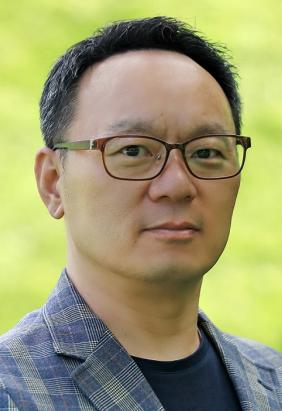
Assistant Professor, Program Director
GME Applied Computing & Geomatics
Contact
Education
2012 Ph.D., Geography, University of Southern California, Los Angeles, California
2003 M.Sc, Earth and Marine Sciences, Hanyang University, Korea
2000 B.Sc, Earth and Marine Sciences, Hanyang University, Korea
Professional Certifications
2018 FAA UAS Drone Pilot License. Federal Aviation Administration, USA
2015 Geographic Information Systems Professional. GIS Certification Institute, USA
2007 Graduate Certificate in Geographic Information Sciences and Technology, Geography, University of Southern California
Biography
Dr. Su Jin Lee is an Assistant Professor of Applied Computing & Geomatics at the Oregon Institute of Technology (Oregon Tech), where he serves as GIS and Surveying Program Director and Founding Director of the Geospatial Research and Training Center. He also leads the development of the Uncrewed Systems (UAS) option within the Geomatics programs, advancing interdisciplinary education that integrates geospatial science, drone technology, and data analytics.
Dr. Lee earned his Ph.D. in Geography from the University of Southern California (USC) in 2012, with a focus on geospatial science. He also holds both a Master’s and a Bachelor’s degree in Earth and Marine Sciences from Hanyang University in South Korea.
He brings extensive teaching experience across multiple institutions. Dr. Lee served as a full-time lecturer at USC for nine years and has held instructional appointments at Ventura College, Moorpark College, the University of Minnesota Duluth, and California State University Long Beach. His teaching portfolio includes Geographic Information Systems (GIS), digital cartography, remote sensing, geospatial technology, environmental studies, and uncrewed aerial systems (UAS)/drone-based geospatial data acquisition, offered at both undergraduate and graduate levels.
Dr. Lee’s research focuses on the interactions between human and environmental systems, with particular emphasis on applying geospatial technologies to address real-world challenges. His work spans climate change, drought, wildfire, land use and land cover change, urban development, and environmental justice. More recently, his research has expanded to include UAV-based remote sensing, high-resolution spatial data acquisition, and geospatial analytics for agriculture and natural resource management, particularly in the Klamath Basin.
He is a certified FAA UAS Remote Pilot and a Geographic Information Systems Professional (GISP), and actively works to integrate emerging technologies, including drone systems and spatial data science, into both research and workforce development.