

The Faculty Policy Committee proposes, and review policies and policy revisions related to faculty matters.
Faculty Policy Committee
Rank, Promotion, and Tenure Co-Chairs
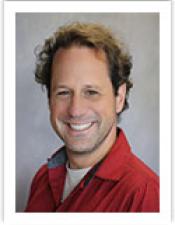
I have been a member of the Natural Sciences faculty at Oregon Tech since Fall 2000. I mainly teach biochemistry and clinical pharmacology in our Biology-Health Sciences (BHS) program, although sometimes I have taught other courses too, including medical genetics, organic chemistry, immunology labs and general chemistry labs. I am proud of all the places of our alumni have gone on to, which are often into post-graduate medical programs like medical doctor, pharmacist, dentistry, physician assistant, veterinary medicine, physical therapy and others. All of these are focused differently from my own educational background, so I make it a priority to help my students think about biochemistry in ways that are applicable to medicine, rather than memorizing a bunch of facts that they could look up and will forget anyway. If you ever meet one of my former biochemistry students, ask them “how much wood could a woodchuck chuck?”—chances are they will remember it from my class, and maybe even how the woodchuck analogy can help explain enzyme kinetics.
I also advise students in our BHS program, and I am always eager to meet with prospective students, or to answer their questions by phone or email.
Outside of classes, I have been a mentor for a variety of undergraduate research projects. Currently I am working with students to study the molecular genetics of cyanobacteria (blue-green algae) in nearby Upper Klamath Lake, along with our department’s microbiologist, Professor Kamal Gandhi. My previous student-involved projects have included cloning of particular bacterial genes/proteins that had never been closely studied before, creation of a home-built fluorescence microscope with 3D-printed parts, finding errors in published, experimentally determined 3D molecular structures of proteins, and developing a simple method to test for gene variants in a dopamine receptor that has been linked to ADHD and risk-taking behavior.
In our cyanobacteria project, students isolate and quantify DNA from bacteria sampled from Upper Klamath Lake, and develop PCR (polymerase chain reaction) methods to identify which species are present and in what proportions. We also send out some samples for full-genome sequencing and analyze the massive amounts of data that come back from that. Along with being involved in genuine scientific discovery, students learn to work independently and as a team in the lab, develop and troubleshoot experimental protocols, and present their results to the university and at regional conferences.
The cyanobacteria that we study are ecologically interesting and important because they affect water quality in the lake—some of them produce toxins while others are harvested as healthy nutritional supplements. The balance between those opposites changes seasonally over each summer and likely between different locations in the lake. Upper Klamath Lake is also home to two species of critically endangered suckerfish (c’waam and koptu) that are culturally important to the Klamath Tribes. Every summer, the hatchlings of these fish have been dying off, so that while there are still some long-lived older fish, they are not able to be replaced in the lake. There is no one factor that controls the non-survival of the juvenile suckerfish, but the role of cyanobacteria, the toxins they produce, and the effect they have on oxygen depletion in the water are all worthy of further study in hopes of helping the fish.
Before I came to Oregon Tech, I earned a BSc (Honours) in Biochemistry from the University of Alberta (I’m Canadian, eh!), a Ph.D. in Chemistry from University of Oregon in Eugene, and did post-doctoral research at University of Texas Southwestern Medical Center in Dallas. I also was a partner in a computer software consulting business for a few years.
When I’m not working, some of my hobbies include running, backpacking and camping. Last year my daughter and I took an amazing 9-day wilderness backpacking trek north of the Arctic circle on Baffin Island in Canada. I’ve climbed on Mt Shasta a bunch of times, including a couple where I guided former students to the summit. I often bicycle-commute to campus including in the snow, and I use my mountain bike, road bike and tandem bike for fun. In the summer of 2021, my spouse and I logged 1000 miles on our tandem in five months, doing various day rides all over Oregon.
Committee Members
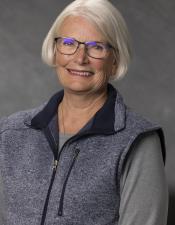
Jeannie graduated from Portland Community College in 1976 with an Associates degree in dental hygiene. She later obtained her bachelor’s degree from Oregon Tech and a Master of Science degree in Allied Health in 2020. Her long career in dental hygiene took her in many directions including working in a periodontal practice in Munich Germany and coordinating a mobile dental van project in Modesto California. In 2015, Jeannie returned to her roots and began her teaching career at Oregon Tech. Her teaching responsibilities include senior lead instructor, medical emergencies, and a junior prevention series. She is also the instructor for the International Externship Program (IEP) taking senior level students to a global site to give dental hygiene services to underserved populations. This combines her passion for travel and cultural learning with teaching and developing outreach compassion in students.
In her free time, Jeannie loves cooking and to travel and experience new places and cultures. She and her husband also have dairy goats which has led her to making homemade goatmilk soaps and products.
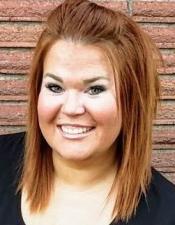
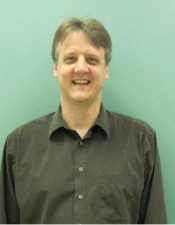
Directed thermal/hydraulic research for US naval reactors, founder rocket club, creating the Oregon Laser Institute to foster manufacturing including lasers as appropriate.