

First Year Courses
- Introduction to EMS
- EMS foundational coursework
- Professional communication and patient interaction
- Early exposure to EMS systems and patient care concepts
- Small cohort learning that supports individualized feedback and mentorship
- Integration of simulation, lab, and scenario-based learning
- Alignment with national education standards to support progression into the professional phase
Second Year Courses (Professional Year)
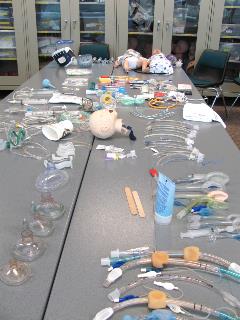
- Small cohort sizes that promote individualized faculty mentorship
- Integration of simulation, case-based learning, and high-fidelity scenarios
- Alignment with National EMS Education Standards and CoAEMSP competencies
The OHSU/Oregon Tech Program utilizes a vast network of EMS and emergency medicine physicians to ensure that the highest quality of education is being delivered. Routinely, some materials delivered in class are cutting edge, not yet published in Paramedic textbooks. The majority of our lecturers are clinical specialists in their areas, and include many practicing paramedics, emergency nurses, attending physicians, residents, and fellows.
The Program employs a Medical Director to serve as our medical conscious. He reviews all exams, interacts with students, and participates in quality assurance / improvement activities. His longstanding reputation in Emergency Medicine, and involvement in local EMS operations contribute to the overall strength of the program.
- Adult Emergency Departments
- Operating Room & Airway Management of both Adult and Pediatric
- Labor & Delivery
- Pediatric Emergency Department
- Training in a major academic medical center with diverse patient populations
- Close collaboration with physicians, nurses, and interdisciplinary teams
- Structured competency tracking to ensure progressive skill mastery
Clinicals and Externships
- Real-world leadership development in active 911 systems
- Strong EMS partnerships that support education
- Graduates enter the workforce with significant field experience and professional networks
- Demonstrated competency across cognitive, psychomotor, and affective domains
- Experience in high-acuity clinical and field environments
- Preparation for National Registry certification and immediate workforce entry
- Professional identity grounded in patient advocacy, teamwork, and lifelong learning
Contact Information
With hands-on experience as a dedicated Medic in the 911 emergency system, Carmen Curtz brings a wealth of expertise in providing critical medical care during high-pressure situations. Holding a Bachelor of Science degree in Communication from Portland State University, Carmen combines a strong educational foundation with a passion for serving the community and aiding individuals in their times of greatest need. Carmen has honed a deep understanding of medical emergencies, demonstrating unwavering compassion while delivering life-saving care to human beings. This extensive real-world experience not only equips Carmen with exceptional medical skills but also a unique ability to communicate effectively under duress.
Carmen is a dedicated educator who finds fulfillment in sharing practical knowledge acquired from the field. This passion for teaching extends from the streets to the classroom, where Carmen empowers aspiring medical professionals with insights drawn from real-life scenarios. By bridging the gap between theory and practice, Carmen inspires students to approach their careers with a blend of technical proficiency and critical thinking. Connect with Carmen to tap into a wealth of practical knowledge, a passion for teaching, and a commitment to serving the community through expertise in the most critical moments.