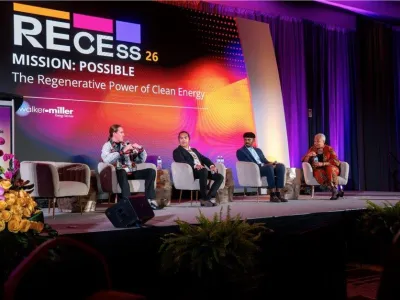

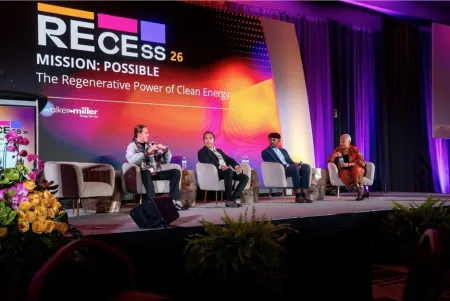
Oregon Tech Renewable Energy Engineering and Honors Program student Cruz Tecumseh Collin participated in the “Faces of the Future” panel in Sept. at the Resilience and Equity in the Clean Energy Sector Summit (RECESS) in Detroit, Michigan.
The annual RECESS conference brings together students, entrepreneurs, researchers, industry representatives, policymakers, community organizers, and workforce leaders to discuss the future of clean energy. The 2026 conference focused on the theme “Mission: Possible – The Regenerative Power of Clean Energy.”
The panel opportunity builds on Collin’s ongoing work in renewable energy, research, and public service. Originally from South Dakota, Collin is a member of the Oglala Sioux Tribe of the Pine Ridge Reservation and was named a 2025 Udall Scholar for his commitment to environmental health.
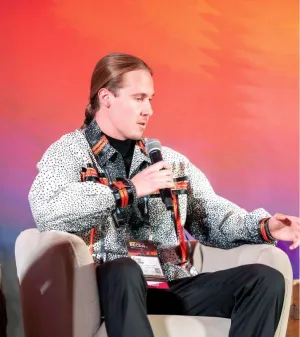
“To see so much hope and positive feedback from the audience about my experiences and outlook on the future helped to give me an extraordinary amount of not only perspective and gratitude but also reinforced my hope and belief that the positive future I have dreamed about helping to build is not only possible, but is just on the horizon,” Collin said.
“We are incredibly proud of Cruz and his accomplishments as a Renewable Energy Engineering student at Oregon Tech,” said Dr. Neslihan Alp, Dean of the College of Engineering, Technology, and Management, and Interim Chair of Electrical Engineering and Renewable Energy. “His dedication to clean energy, sustainability, and public service exemplifies the leadership and innovation we strive to cultivate in our students. Having our students contribute their perspectives alongside national leaders and industry professionals is a tremendous opportunity, not only for their personal and professional growth but also for representing Oregon Tech on a national stage.”
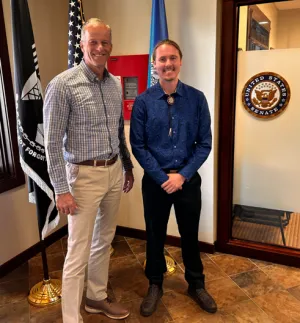
Over the summer, Collin also completed an internship with the office of U.S. Senate Majority Leader John Thune. During the internship, Collin represented Thune’s office at public meetings and events involving veterans' affairs, military ceremonies, utility-scale energy, businesses, and agriculture. He also assisted with archiving casework files and contacted state district offices to create an updated centralized resource of meeting and office information.
Collin said the experience helped him learn how to effectively interact with constituents and provided firsthand experience with how the state and federal government work together.
At the conclusion of the internship, Thune recognized Collin for his work on the floor of the U.S. Senate, placing the recognition in the Congressional Record.
“When I came into this internship, I was hoping it would give me perspective, insight, and connections to effectively work with the government at as many stages as possible. However, what it ended up revealing on top of this is that there are a lot of genuinely good people in government who are doing their best to serve within the construct they are given. And in order to truly help the government to evolve to serve the future, new environmentally aligned solutions and technology must be developed and proven as well as governing constructs. For change for the sake of change is dangerous, but positive and well-structured change is evolution,” Collin said.