

2019 Discussion Groups
The Flipped Classroom - Fall Term 2019
A number of Oregon Tech instructors are exploring implementing “Flipped Learning” in their courses. If you’d like to participate in a Flipping discussion/support group in an upcoming term (..over summer? …next fall?), please respond to Travis.Lund@oit.edu to get connected!
In brief, the “Flipped learning” pedagogy inverts the traditional distribution of a course’s activities. Instead of the instructor introducing content in class, followed by students applying the material on their own via out-of-class (homework) assignments, Flipped classes assign content introduction as an out-of-class assignment (via readings or videos), while in-class time is reserved for practicing content application with the instructor’s assistance. You can find more resources regarding Flipped Learning at the following links: https://www.washington.edu/teaching/teaching-resources/engaging-students-in-learning/flipping-the-classroom/ and https://flippedlearning.org/
The Craft of Teaching - Spring Term 2019
The Craft of Teaching: A Guide to Mastering the Professor’s Art by Kenneth Eble. The author shares his own views on the practical side of teaching — lectures, discussion, tests, grades, advising, more. We will discuss Eble's views in light of our own experiences and discuss changes in higher education since Eble’s book was first published around 1980.
The group meets Monday afternoons 3:30-4:30 in DOW251, discussing one or two chapters per week. We would like to include as many participants as possible. If you’re interested in joining the discussion or have questions, please contact Jesse Kinder at jesse.kinder@oit.edu. We also have a skype link available – if you need it sent to you, please contact Barb.meng@oit.edu
Questions? Contact
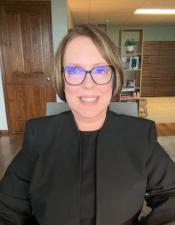
I have been a full-time faculty member at Oregon Tech in Klamath Falls, OR since the fall for 2014. I have about two decades of human resource experience including as the director of human resources at Colby-Sawyer College. Prior to that, I was the human resources officer for Philharmonic Center for the Arts, the human resource and risk manager at Drax Group, and a retirement and benefits specialist with Brown & Brown Benefits, all in Naples, Fla. I was also a corporate trainer and supervisor at Boston Financial Data Services in Quincy, Ma.
Dr. Travis Lund is the Director of the Biology-Health Sciences program in the Natural Sciences department. He spends most of his time teaching organic chemistry, genetics, the freshman Intro to Medical Sciences course, as well as an assortment of senior/grad level electives. A native of the coastal redwood forests of Crescent City, CA, he enjoys taking advantage of all four seasons in the Klamath Basin via hiking, kayaking, skiing, biking, rollerblading, spelunking, and any other outdoor activities he can entice his friends and family to partake in.
Research Background
- Asymmetric Recognition of Nucleobase Features by DNA Polymerases
- Synthesis of a Novel Dibasic (A:T) 2'-deoxyriboside
- Question Order Effects in Chemistry Concept Inventories
- Awareness and Adoption of Research-Based Instructional Practices in STEM Education
Courses Taught
- BIO 109: Intro to Medical Sciences
- BIO 235: Human Genetics
- BIO 341: Medical Genetics
- BIO 441/451: Genetic Engineering & Therapy
- BIO 495: Research Projects in Biology
- BIO 407/507: AI in Medicine
- BIO 407/507: Scientific Teaching
- BIO 509: Introduction to Biomedical Sciences
- CHE 101/104: Intro to General Chemistry (with lab)
- CHE 307: Toxicology
- CHE 407/507: Toxicology II
- CHE 331/332/333: Organic Chemistry I/II/III (with labs)
- CHE 450L: Biochemistry (labs)
Journal Articles
Undersander, M., Lund, T.J., Langdon, L.S., & Stains, M. (2017). Probing the question order effect while developing a chemistry concept inventory. Chemistry Chemistry Education Research and Practice, 18 (p. 45-54). Click here to access.
Lund, T.J., & Stains, M. (2015). The Importance of Context: An Exploration of Factors Influencing the Adoption of Student-Centered Teaching among Chemistry, Biology, and Physics Faculty. International Journal of STEM Education, 2:13. Click here to access.
Lund, T.J., Pilarz, M., Velasco, J.B., Chakraverty, D., Rosploch, K., Undersander, M., & Stains, M. (2015). The Best of Both Worlds: Building on the COPUS and RTOP observation protocols to easily and reliably measure various levels of reformed instructional practices. CBE Life Sciences Education, 14(2). Click here to access.
Lund, T.J., Cavanaugh, N., Joubert, N., Urban, M., Patro, J.N., Hoceck, M., and Kuchta, R.D. (2011). B family DNA Polymerases Asymmetrically Recognize Pyrimidines and Purines. Biochemistry, 50(33). Click here to access.
Conference Proceedings
Lund, T.J., & Owen, T. (April, 2026). Design (or remix!) a personalized course-support chatbot using a free, secure, open-source nonprofit platform. Presentation at the Instructional Technology Council AI Virtual Summit.
Lund, T.J. (November, 2025). OER (/free) AI Tools in Chemistry Education. Presentation at the American Chemical Society Western Regional Meeting, San Jose, CA.
Lund, T.J. (March, 2024). COPUS and DART in a Small Nontraditional Classroom. Presentation at the American Chemical Society National Meeting, New Orleans, LA.
Wright, K., Nguyen, A., Lund, T.J. (July 2023). Comparing COPUS and DART Data from a Small Nontraditional Classroom. Poster at the Society for the Advancement of Biology Education Research National Meeting, Twin Cities, MN.
Rahmani, S., Claybaugh, D., Stobie, J., Weitzman, K., Nguyen, C., Fang, P., and Lund, T.J. (June, 2019). Analysis of an Active Learning Classroom Utilizing COPUS and DART. Poster at the ACS Northwest Regional Meeting, Portland, OR.
Lund, T.J., Bettencourt-McCarthy, A., Anthony, S., & Bailey, S. (July, 2018). Homegrown, collaborative, faculty-led professional development. Poster at the Biennial Conference on Chemical Education, Notre Dame, IN.
Lund, T.J. (April, 2018). Using primary literature to teach content via “homemade,” inquiry-based worksheets. Presentation at the ACS Western States Chemical Education Group Conference, Eugene, OR.
Lund, T.J., Anthony, S., & Byrne, K. (June, 2017). Concept mapping as a review strategy: Effects on student achievement, attitudes, and metacognition. Presentation at the ACS Northwest Regional Meeting, Corvallis, OR.
Lund, T.J., Anthony, S., & Byrne K. (August, 2016). The effects of concept mapping on student performance, metacognitive abilities, and attitude towards chemistry. Presentation at the Biennial Conference on Chemical Education, Greeley, CO.
Anthony, S., Byrne, K., & Lund, T.J. (August, 2016). Metacognitive monitoring judgments in diverse chemistry and STEM contexts. Presentation at the Biennial Conference on Chemical Education, Greeley, CO.
Anthony, S., Lund, T.J., & VanRooyen, C. (June, 2015). Beginning a transition towards active-learning classrooms: Oregon Tech's story. Presentation at the ACS Northwest Regional Meeting, Pocatello, ID.
Stains, M., & Lund, T.J. (June, 2015). Leveraging the COPUS and RTOP observation protocols to easily and reliably measure reformed instructional practices. Poster at the Gordon Research Conference on Chemistry Education Research and Practice, Lewiston, ME.
Undersander, M., Lund, T.J., & Stains, M. (March, 2015). Probing the question-order effect on chemistry concept inventories. Poster presented at the American Chemical Society National Meeting, Denver, CO.
Lund, T.J., & Stains, M. (March, 2015). Building a Teaching Profile: Using a modified COPUS observation protocol to easily and reliably measure reformed instructional practices. Presentation at the American Chemical Society National Meeting, Denver, CO.
Lund, T.J., & Stains, M. (August, 2014). Characterization of the Research-Practice Gap in Chemistry Education and Factors Influencing It. Presentation at the Biennial Conference on Chemical Education, Allendale, MI.
Stains, M., Lund, T.J., & Pazicni, S. (August, 2014). Infusing the Science of Learning into Your Chemistry Classroom: Evidence-Based Instructional Practices. Workshop presented at the Biennial Conference on Chemical Education, Allendale, MI.
Pazicni, S., Lund, T.J., & Stains, M. (August, 2014). Infusing the Science of Learning into Your Chemistry Classroom: Cognitive Principles. Workshop presented at the Biennial Conference on Chemical Education, Allendale, MI.
Lund, T.J., & Stains, M. (August, 2014). Awareness and adoption of student-centered instructional strategies at a research-intensive institution. Presentation at the American Chemical Society National Meeting, San Francisco, CA.
Lund, T.J., Chakravety, D., Pilarz, M., Velasco, J., & Stains, M. (August, 2014). Influencing faculty instructional strategies: The effect of an on-site, semester-long faculty development workshop on classroom practices. Presentation at the American Chemical Society National Meeting, San Francisco, CA.
Lund, T.J., & Stains, M. (July, 2014). Characterization of the Biology Education Research-Practice Gap and Factors Influencing It. Invited Concluding Keynote at the Society for the Advancement of Biology Education Research National Meeting, Twin Cities, MN.